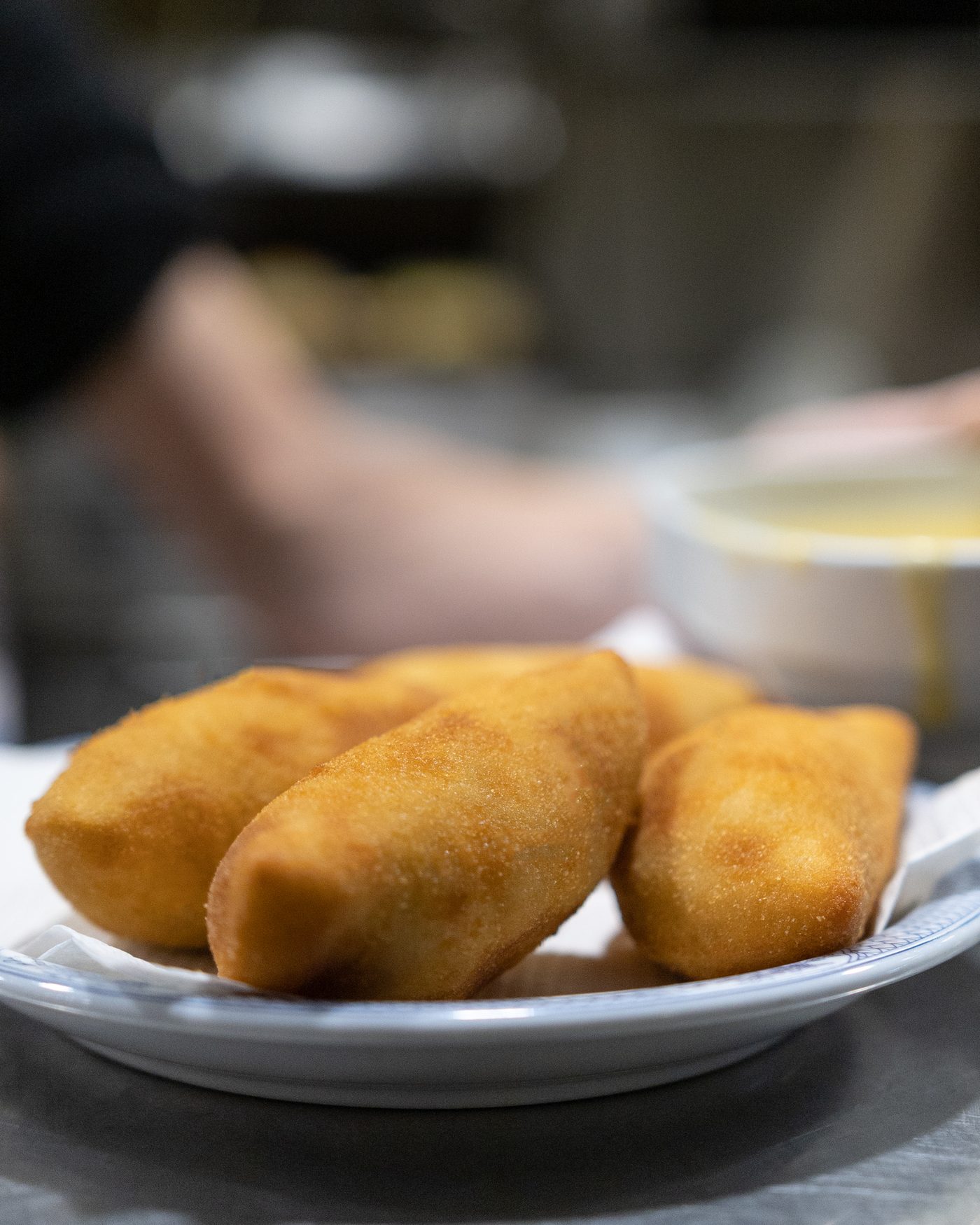
First, what exactly is a rissol?
A rissol (plural: rissóis) is a Portuguese half-moon of scalded dough, folded around a filling, breaded and deep-fried. You'll find them in every pastelaria display case in the country — shrimp, fish, meat — sitting under the glass next to the croquetes and the bolinhos de bacalhau. Most are, to be honest, unremarkable: made in bulk, fried in advance, eaten lukewarm with a bica because they're there.
That's precisely what makes a great one so startling. When a rissol is made from scratch and fried to order — pastry blistered and golden, filling still steaming — it stops being counter food and becomes a small argument for taking snacks seriously. Porto, a city that treats the humble petisco as a birthright, has been making that argument for decades.
The city's quiet obsession
Porto's eating culture runs on cervejarias — the bustling beer halls where football plays on the TV, imperiais land cold, and something fried arrives before you've decided what you actually want. In these houses the rissol isn't an afterthought; it's a calling card. Regulars judge a cervejaria by its rissol the way Lisboetas judge a pastelaria by its pastel de nata.
The scrutiny is real. Time Out Porto once settled the question the honest way: a blind taste test in its newsroom, pitting six of the city's most reputed meat rissóis against each other, with a shortlist of four winners emerging from the crumbs. Food creators have since picked up the thread — a recent viral tour of Porto's best rissóis racked up views across TikTok and Instagram, tasting its way across the city before naming a champion.
The house that perfected it
Both trails lead to the same name: Capa Negra — and to a recipe that hasn't changed since 1972.
The Capa Negra rissol made Time Out's winners' cut in that blind tasting, and the viral creators' tour went further, crowning it the best in Porto outright. Ask around town and you'll hear less measured verdicts; among regulars, "the best meat rissóis in the world" gets thrown around with a straight face.
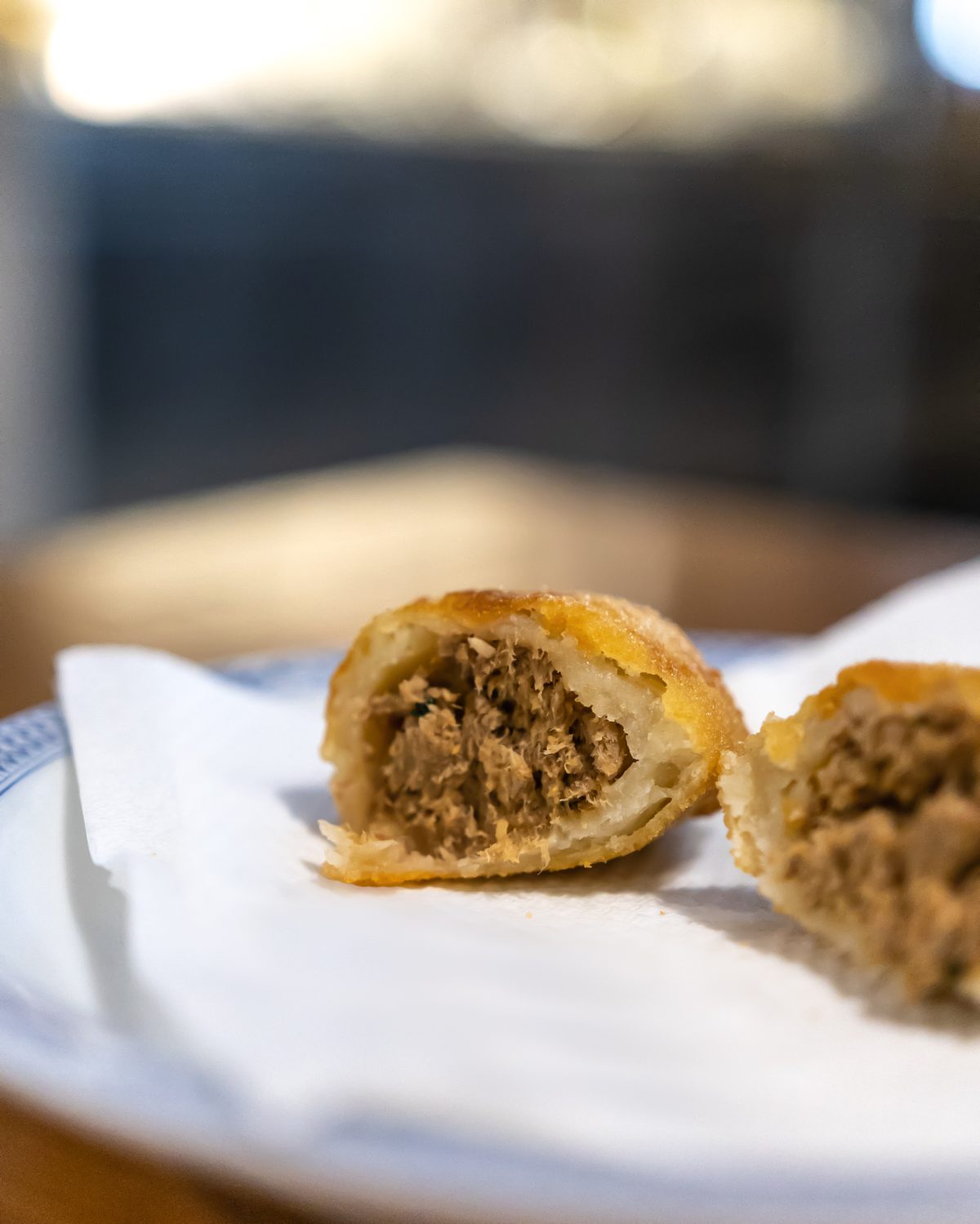
What earns the reputation is the filling. Where most meat rissóis are padded out with whatever mince is cheapest, these are filled entirely with vazia — sirloin — slow-cooked, shredded, and folded through with parsley. It's steak-grade beef inside bar food, which sounds like overkill until you taste the difference: deep, juicy, and unmistakably real. The pastry is delicate rather than doughy, the crumb coating fries up crisp, and every rissol is fried to order, never held under glass.
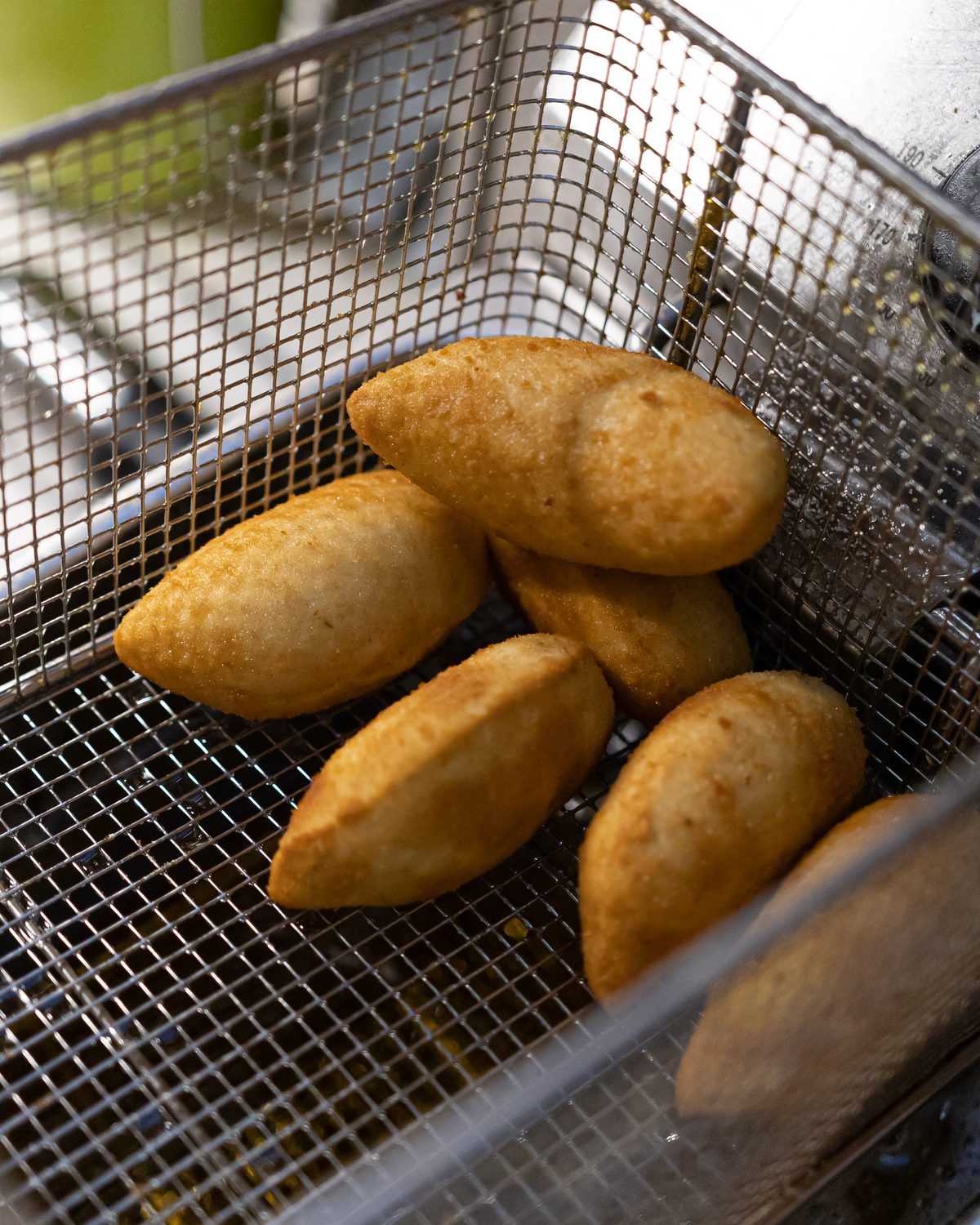
The scale of the operation says as much as any review: on a busy Saturday, the kitchen sends out more than 1,500 rissóis. That is not a garnish. That's a production line for a fifty-year-old recipe, running at full tilt because the city keeps ordering.
There's a ritual attached, too. At the family's tables, rissóis arrive at the start of every meal — a warm, golden opener that locals know by heart and first-timers tend to remember longer than whatever came after. It's the Porto equivalent of bread and olives, except somebody clearly loves you.
Where to try one
The most convenient pilgrimage site is Capa na Baixa, the downtown house of the Capa Negra family, on Praça de Dom João I — two minutes from Aliados, five from São Bento station. Order a plate of rissóis and a cold imperial before anything else; the francesinha can wait. The original Capa Negra II, over on Campo Alegre, serves the same recipe in classic cervejaria surroundings.
For a second opinion, Cervejaria Diu also earned its place in Time Out's tasting — its plump, juicy rissóis have their own loyal congregation. Trying both in one week is not gluttony; it's research.
The Rissol Cheat Sheet
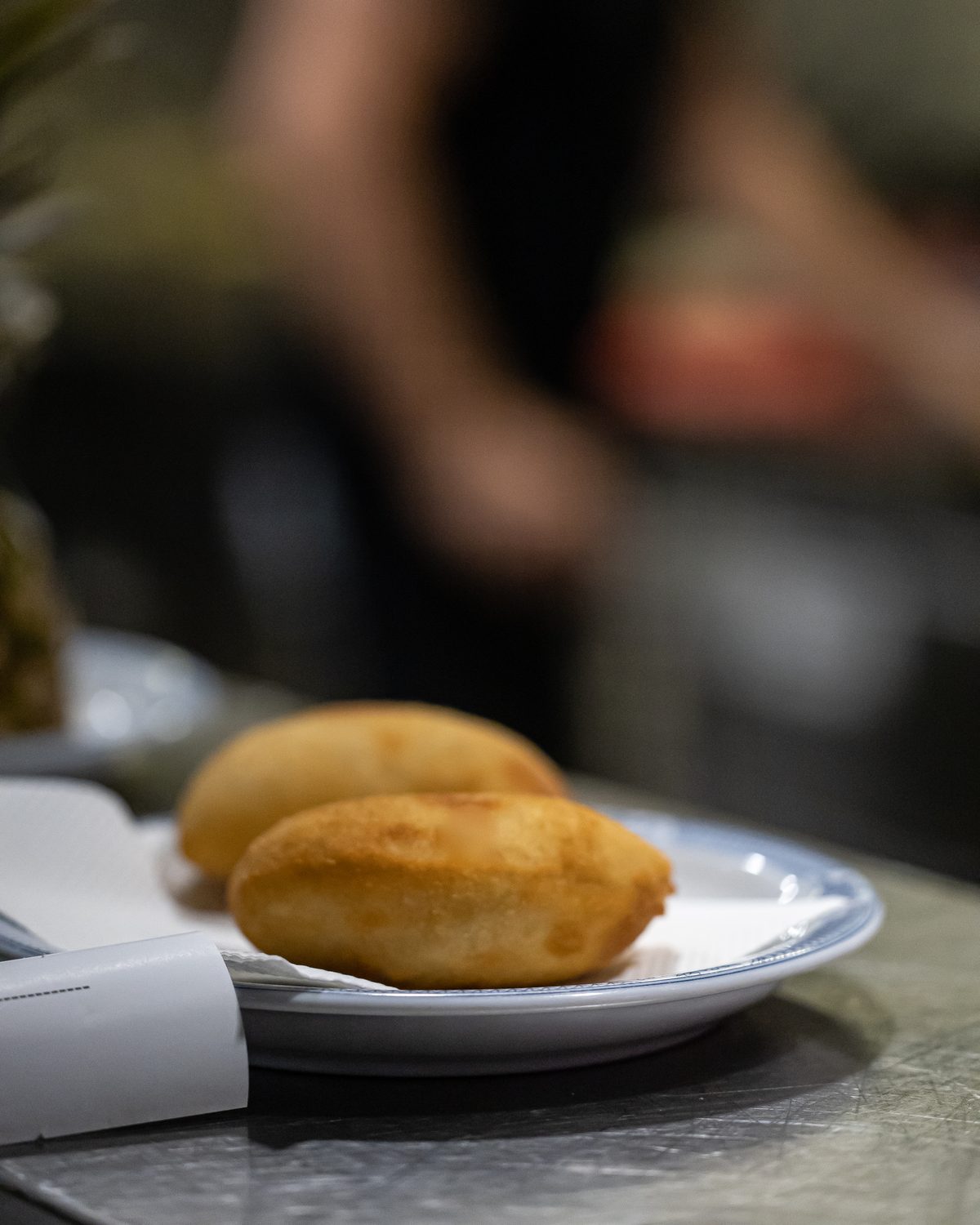
What: Half-moon pastry, breaded and deep-fried, classically filled with meat, shrimp or fish.
The one to seek out: The Capa Negra meat rissol — 100% slow-cooked sirloin, recipe unchanged since 1972.
Where: Capa na Baixa, Praça de Dom João I 175 (downtown) · Capa Negra II, Rua do Campo Alegre.
Order like a local: A plate of rissóis and an imperial, before the mains. Eat them hot. Do not share unless you must.